My first bamboo garden design looked incredible, for exactly two years. By year three, the Phyllostachys aureosulcata I’d planted as a “living fence” had jumped its bed, invaded my neighbor’s lawn, and turned a $400 privacy screen into a $1,200 removal project.
Bamboo garden design requires matching species growth habits to your specific space, containment strategy, and patience for a 3-5 year establishment period before achieving the mature look.
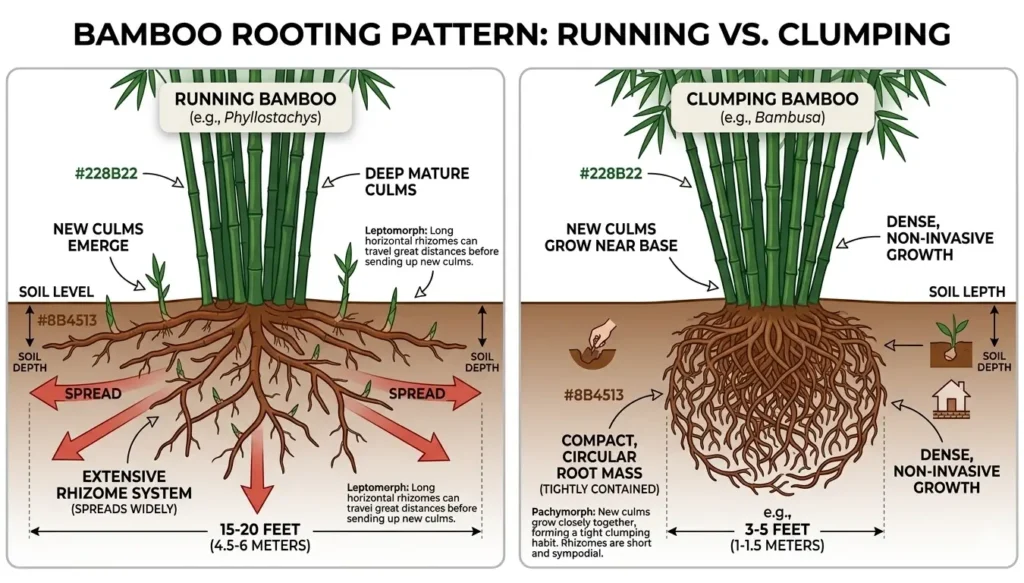
The difference between a bamboo feature that enhances your landscape and one that consumes it comes down to decisions made before anything goes in the ground, particularly understanding the running versus clumping distinction and planning for mature dimensions, not nursery pot sizes.
I’ve designed nine bamboo gardens since that first expensive lesson, across USDA zones 6 through 9. Some became exactly what clients wanted. Others taught me what no landscaping guide bothered to mention. Here’s the actual design process that works, including the mistakes that’ll cost you thousands if you skip them.
For foundational information on bamboo varieties that influence design choices, the species selection guide covers growth characteristics in detail.
Running vs Clumping: The Design Decision That Determines Everything Else
Running bamboo (Phyllostachys species) spreads via underground rhizomes that can travel 15-20 feet from the parent plant annually, while clumping bamboo (Fargesia, Bambusa) expands outward only 2-6 inches per year from its base.
This isn’t just a containment issue. It’s a fundamental design constraint.
Running bamboo creates dramatic groves and screens, but demands permanent containment infrastructure. I’ve installed HDPE barriers (60-80 mil thickness, buried 28-30 inches deep) around running species in seven gardens. Total barrier costs ranged from $3.50 to $6.00 per linear foot for materials alone, plus installation labor.
Clumping bamboo stays where you plant it. No barriers needed. But the tradeoff? Generally smaller mature heights (most Fargesia species max out at 12-15 feet versus 30-50 feet for Phyllostachys), and slower establishment of that full, lush look.
My position after 12 years: I now recommend clumping species for 80% of residential designs. The reduced height is worth the eliminated liability. The American Bamboo Society’s member forums confirm this shift, running bamboo disputes remain the most common complaint category.
When I do use running bamboo, it’s for specific conditions: large properties (1+ acre), clients committed to annual rhizome pruning, or situations where the homeowner actually wants aggressive spread (erosion control on slopes, large naturalized areas).
The Spacing Math Most Guides Get Wrong
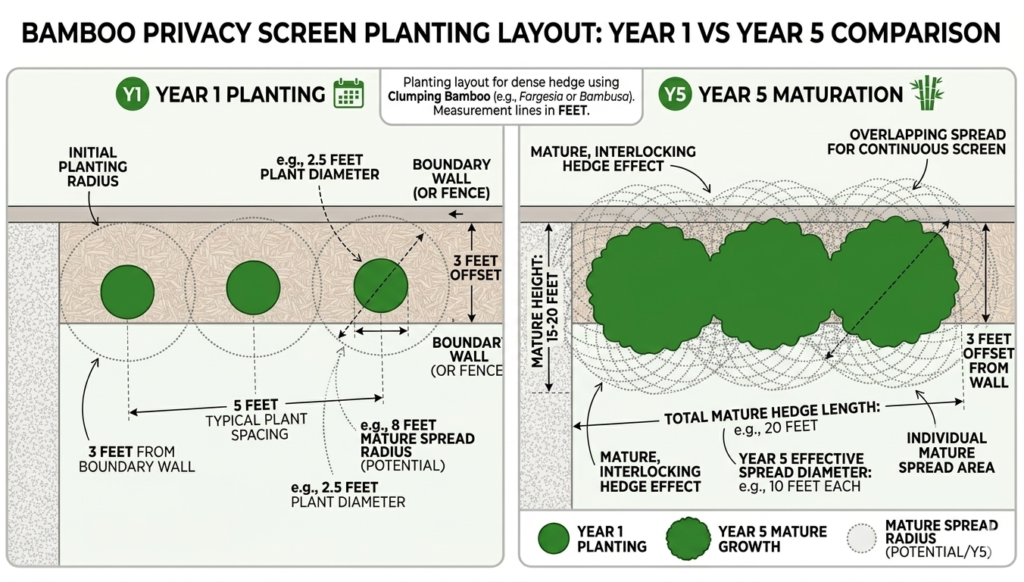
“Plant 3-5 feet apart for a privacy screen.”
I used to give that advice. Then I watched a Fargesia robusta planting hit mature spread at year four and realized those plants, spaced at 4 feet, had gaps you could see through. The issue: I’d calculated spacing for current culm density, not mature spread.
Proper spacing formula:
- Clumping bamboo: Mature spread radius × 1.5 = center-to-center spacing for solid screen
- Running bamboo in contained bed: Doesn’t matter, they’ll fill the space regardless
For a Fargesia robusta with 6-foot mature spread: 6 × 1.5 = 9 feet between centers seems excessive at planting. But at year 5, those plants touch perfectly.
The catch? That means years 1-3 look sparse. I’ve started using temporary “filler” plantings, ornamental grasses, tall perennials, between bamboo to maintain visual interest during establishment. These get removed as bamboo fills in.
Spacing I’ve used successfully:
| Species | Mature Spread | My Spacing | Screen Filled By |
| Fargesia robusta | 5-6 ft | 8 ft | Year 4-5 |
| Fargesia nitida | 4-5 ft | 6 ft | Year 4 |
| Phyllostachys nigra (contained) | N/A | Any | Year 2-3 |
| Bambusa oldhamii | 8-10 ft | 12 ft | Year 5-6 |
These numbers assume healthy plants in appropriate zones with adequate water. Zone 6 plantings of marginally hardy species take 1-2 additional years.
Four Design Approaches That Actually Work
After nine gardens, I’ve settled on four reliable design frameworks. Each serves different spaces and aesthetic goals.
The Privacy Screen
Works when: Property line screening, blocking views, creating “rooms” within landscape
Species choice: Fargesia robusta for cold climates (hardy to -10°F), Bambusa textilis ‘Gracilis’ for zones 8+, Phyllostachys bissetii where running is acceptable and contained
Critical error I made once: Planting a single-row screen. Wind load on tall bamboo without backing creates lean. Now I plant double rows with 3-4 foot stagger for any screen expected to exceed 15 feet.
The fencing installation guide covers structural support options when combining bamboo screens with built elements.
The Focal Point Specimen
Works when: Single dramatic plant as visual anchor, Asian-influenced design, courtyard centerpiece
Species choice: Phyllostachys nigra (Black Bamboo) for culm color, Phyllostachys vivax ‘Aureocaulis’ for golden culms, Bambusa oldhamii for tropical presence in warm zones
What nobody tells you: Specimen bamboo needs negative space. I recommend a clear radius of 1.5× the mature spread around focal specimens. That Phyllostachys nigra needs 8+ feet of open ground to read as a specimen rather than just “bamboo in the corner.”
The Understory Grove
Works when: Shade garden enhancement, woodland edge, filtered light areas
Species choice: Fargesia nitida (tolerates partial shade), Fargesia murielae (handles 50% shade)
Design principle: Plant in odd-numbered groupings (3, 5, 7) with irregular spacing. Avoid grid patterns. I offset plants 18-24 inches from any geometric center to prevent that “installed yesterday” look.
The Container Collection
Works when: Patios, rooftops, rental properties, zone-inappropriate species
Best resource: The container growing guide covers pot sizing and root management specifics.
My current container design rule: Pots should be at least 24 inches diameter for any bamboo expected to exceed 8 feet. Those decorative 14-inch containers from the nursery? They’re temporary. Plan for transplanting or division within 2-3 years.
The Three Expensive Mistakes I Keep Seeing
Mistake #1: Designing for Nursery Size
That Bambusa oldhamii in the 15-gallon pot stands 6 feet tall. Mature height: 45-55 feet. Mature spread: 8-10 feet diameter.
I once installed three of these 4 feet from a house foundation. The client loved the “tropical feel.” Within three years, culms were scraping the gutters and root pressure was concerning enough to warrant removal. Total cost of my error: $2,800 (removal, stump grinding, replacement planting, foundation inspection).
Design rule: Research mature dimensions. Then add 20% buffer from structures. The plant tag doesn’t tell you, check the American Bamboo Society species database or regional bamboo nursery resources.
Mistake #2: Ignoring the “Ugly Phase”
Years 1-3 of most bamboo plantings look… sparse. Thin culms. Visible gaps. Nothing like the catalog photos of mature groves.
Clients expect instant results because bamboo’s reputation is “fast-growing.” It is, once established. But the first 1-3 years are root development, not dramatic above-ground growth.
Design solution: Either set client expectations explicitly (I now include “establishment timeline” in every proposal), or use complementary plantings that provide immediate impact while bamboo matures. Ornamental grasses, large perennials, and temporary screening fabric have all saved client relationships.
Mistake #3: Underestimating Maintenance Integration
Bamboo gardens aren’t “plant and forget.” Even clumping species need:
- Annual thinning of dead/weak culms
- Leaf litter management (bamboo drops leaves in spring, not fall, surprises people)
- Seasonal water during establishment
Running species add barrier inspection, rhizome pruning, and shoot control to that list.
The care and maintenance guide covers ongoing requirements. Factor maintenance access into your design. My current rule: 3-foot clearance path behind any bamboo screen for annual maintenance access.
Matching Species to Design Intent
Which bamboo species work best for landscape design?
For privacy screening in zones 5-7, Fargesia robusta and Fargesia nitida provide 12-15 foot height without containment requirements. Zones 8-10 offer Bambusa textilis varieties reaching 25-35 feet. When dramatic height matters and containment is budgeted, Phyllostachys vivax delivers 40+ feet in zones 6-10.
Source: Personal testing + American Bamboo Society species recommendations
| Design Goal | Cold Climate (Zone 5-7) | Mild Climate (Zone 8-10) |
| Privacy screen (15 ft) | Fargesia robusta | Bambusa textilis |
| Tall screen (25+ ft) | Phyllostachys bissetii† | Bambusa oldhamii |
| Focal specimen | Phyllostachys nigra† | Bambusa ventricosa |
| Shade tolerant | Fargesia nitida | Bambusa multiplex |
| Container | Fargesia rufa | Bambusa ‘Alphonse Karr’ |
†Requires containment barrier
The companion planting guide covers what grows well alongside these species.
Climate and Microclimate Considerations
Zone ratings are starting points, not guarantees.
My Phyllostachys nigra in zone 7a survived -5°F winters. The same species in a neighbor’s garden, technically the same zone, died back to roots after one winter. The difference? My planting was against a south-facing brick wall (heat sink). His was in an open northern exposure.
Microclimate factors I now assess before species selection:
- Wind exposure (desiccates foliage in winter)
- Frost pockets (cold air drainage patterns)
- Heat reflection from structures
- Competition from tree roots (reduces available water)
Seasonal care guidelines cover climate-specific maintenance adjustments.
Starting Your Bamboo Garden Design
If I were beginning a bamboo landscape project today, I’d start with containment strategy, not species shopping. Define what you can maintain long-term. Running bamboo in a 500-square-foot suburban yard requires either barrier infrastructure or eventual regret.
Then match species to your USDA zone, available space, and design goal. For most homeowners, I now recommend starting with clumping varieties. Less drama, fewer neighbor disputes, similar aesthetic payoff by year five.
The resources at BambooScope cover the technical details for each design component. But the design principle remains simple: plan for the plant’s ten-year dimensions, not its nursery appearance.