Clean bamboo flooring with a microfiber dust mop daily and a damp (not wet) microfiber mop weekly using a pH-neutral cleaner between 6.5-8.0. The specific products and frequency depend entirely on your floor’s finish type, polyurethane, aluminum oxide, or oil, not the bamboo construction itself.
I’ve cleaned bamboo floors in three rooms of my home for six years now, tested 11 different cleaning products, and tracked finish degradation across all of them. What I learned contradicts most of the generic advice you’ll find online. Your finish type matters more than whether your bamboo is strand-woven or horizontal-grain. Get that wrong, and you’re accelerating wear while thinking you’re protecting your investment.
This guide covers finish-specific cleaning protocols, the products that actually work (and the popular ones that don’t), plus the seasonal adjustments that keep bamboo looking new for decades. If you’re dealing with specific damage issues, our bamboo flooring maintenance guide covers restoration and long-term care strategies.
Why Finish Type Matters More Than Bamboo Type
Everyone asks whether strand-woven bamboo needs different cleaning than solid or engineered. After six years of testing? Not really. What matters is what’s on top of the bamboo.
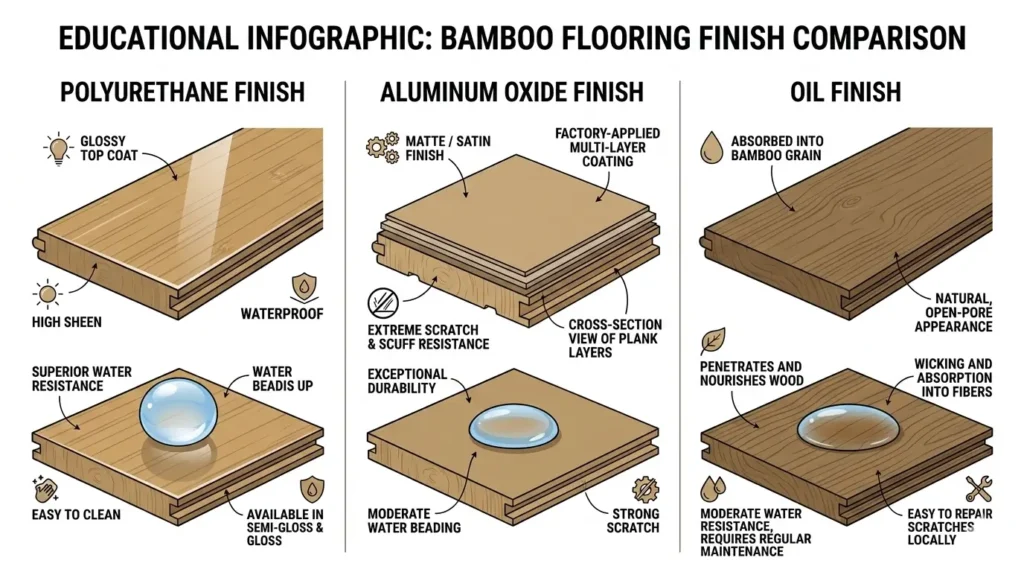
Polyurethane-finished bamboo (about 70% of residential installations) forms a plastic-like barrier that’s cleaned differently than oil-finished floors, which absorb into the bamboo fiber. Aluminum oxide coatings, factory-applied on most engineered and click-lock bamboo flooring, are the most durable but also the most sensitive to pH imbalances.
Check your finish type before buying any cleaner. Look at your purchase documents or the manufacturer website. If water beads on the surface, you have a film-forming finish (polyurethane or aluminum oxide). If water absorbs slowly, you likely have an oil or wax finish.
Here’s why this matters: I used Murphy’s Oil Soap on my polyurethane floors for 18 months because “oil soap” sounded gentle. It left invisible residue that attracted dirt, dulled the sheen, and when I finally needed scratch repair at year four, the refinisher charged an extra $340 to strip the buildup before recoating.
| Finish Type | Cleaning Approach | Avoid | Recoat Timeline |
| Polyurethane | pH-neutral cleaner, damp mop | Oil-based products, wax | 7-10 years |
| Aluminum Oxide | Manufacturer-specific cleaner | Acidic cleaners, polish | 15-25 years |
| Oil/Wax | Designated oil soap, buffing | Water-based cleaners | Annual refresh |
The National Wood Flooring Association (NWFA) recommends following manufacturer guidelines over generic hardwood advice, and bamboo manufacturers are even more specific about pH requirements than traditional hardwood brands.
The Right Tools: What I Use After Testing 8 Different Mops
I’ve owned cheap dust mops that scratched, expensive spray mops that over-wet, and everything in between. Here’s what actually works.
Daily cleaning: A wide microfiber dust mop (18-24 inches) with a washable, removable pad. I use a basic Bona mop head, but the brand matters less than the microfiber quality. Look for split-fiber microfiber with at least 200,000 fibers per square inch, these grab dust instead of pushing it around.
Weekly cleaning: The same mop frame with a damp microfiber pad. Not a soaking pad rung out. A pad misted with cleaner until slightly damp to touch. I spray the pad, not the floor, this prevents pooling in seams where water causes the most damage.
What I stopped using:
- Steam mops: The heat and moisture combination delaminated a section of my engineered bamboo near a doorway. Took 8 months to notice the edges lifting. Steam mops void most bamboo warranties, and after seeing the damage, I understand why.
- String mops: Too wet, too inconsistent, and the cotton fibers can leave lint that shows on dark carbonized bamboo.
- Swiffer WetJet: The cleaner is pH 10+, which is too alkaline for most bamboo finishes over time. One use won’t hurt. Consistent use causes cumulative dulling.
Yes, you can vacuum bamboo, but only with the beater bar OFF. I use a cordless stick vacuum with a hard floor setting for quick cleanups. The rotating brush on carpet mode will scratch any bamboo finish, including strand-woven rated at 3,000+ Janka hardness. Hardness measures dent resistance, not scratch resistance. Different properties entirely.
Which Cleaners Actually Work (I Tested 6 Popular Options)
After the Murphy’s Oil Soap disaster, I started pH-testing every cleaner before using it. A $12 pH meter from Amazon saved me from repeating that mistake.
What cleaner should you use on bamboo floors?
Use a pH-neutral cleaner (6.5-8.0 pH) specifically formulated for polyurethane-finished hardwood or bamboo. Bona Hardwood Floor Cleaner (pH 7.0) is the industry benchmark. Method Squirt + Mop Wood Floor Cleaner (pH 7.2) is a good alternative. Avoid anything with oils, waxes, or citrus, these either build up or are too acidic.
My pH test results:
| Product | pH Level | Verdict |
| Bona Hardwood Floor Cleaner | 7.0 | ✓ Safe, no residue |
| Method Wood Floor Cleaner | 7.2 | ✓ Safe, slight fragrance residue |
| Murphy’s Oil Soap | 9.5 | ✗ Too alkaline, causes buildup |
| Vinegar/Water (1:10) | 3.2 | ✗ Too acidic, dulls finish |
| Pine-Sol Original | 10.5 | ✗ Far too alkaline |
| Plain water | 7.0 | ✓ Safe but no cleaning power |
The vinegar myth deserves its own callout. Every “natural cleaning” article recommends diluted vinegar on floors. On bamboo with polyurethane finish, vinegar’s acidity (even diluted to pH 4-5) etches the finish microscopically over time. You won’t see it immediately. By year three, you’ll wonder why your floors look hazy compared to when installed. That’s cumulative acid damage.
For oil-finished bamboo, use the specific maintenance product from your floor’s manufacturer. Rubio Monocoat floors need Rubio soap. Pallmann Magic Oil floors need Pallmann cleaner. This isn’t marketing, oil finishes require compatible chemistry to maintain protection.
My Weekly Cleaning Method (The Actual Steps)
After six years of refinement, here’s my exact weekly cleaning process for polyurethane-finished strand-woven bamboo:
Step 1: Dry dust first. Always. Run the microfiber dust mop over the entire floor before any moisture touches it. This prevents turning dust into mud that scratches the finish as you mop.
Step 2: Inspect for stuck debris. Gritty particles under a damp mop become sandpaper. I check high-traffic paths and entry areas for anything that needs spot attention.
Step 3: Spray the mop pad, not the floor. 6-8 sprays of Bona cleaner per room. The pad should feel damp like a wrung-out washcloth, not wet enough to drip. This is where most people over-wet.
Step 4: Mop with the grain. Bamboo has a visible grain direction. Mopping with it (not against) prevents streaking and pushes debris toward edges instead of into seams.
Step 5: Flip or change pads for larger areas. One pad covers about 400 square feet before it’s too dirty to clean effectively. I have three pads and wash them all weekly.
Step 6: Allow to air dry. Should take 2-3 minutes maximum if your pad was properly damp. If floors are still wet after 5 minutes, you used too much moisture.
For high-traffic homes (kids, dogs, frequent guests), you might need this twice weekly. For a couple with no pets? Every 10-14 days works fine with daily dusting. The goal is removing grit before it scratches, not disinfecting the surface.
Seasonal Adjustments Nobody Mentions
This is what I wish someone had told me before my first winter with bamboo floors.
Bamboo responds to humidity changes more dramatically than oak or maple. In summer (higher humidity), bamboo absorbs moisture from air and expands slightly. In winter (dry heated air), it contracts. These seasonal movements affect how you should clean.
Summer protocol (humidity above 50%):
- Reduce damp mopping frequency, floors already have ambient moisture
- Focus more on dust mopping to control tracked-in debris
- Watch for standing water from wet shoes or A/C condensation
- Clean spills immediately; humid bamboo absorbs faster
Winter protocol (humidity below 35%):
- Damp mop slightly more frequently, dry bamboo can handle it and benefits from occasional moisture
- Run a humidifier to maintain 35-55% indoor humidity
- This prevents gapping between boards AND makes cleaning easier
- Dry floors show dust more; don’t confuse visibility with actual dirt increase
My biggest seasonal mistake? Aggressive winter cleaning to combat visible dust, which I later learned was actually fine particles from dry air, not dirt. I was over-mopping floors that needed humidity control, not more cleaning.
The bamboo flooring climate and humidity guide covers humidity management in depth if you’re seeing gaps or cupping issues beyond normal cleaning concerns.
Spot Cleaning: Stains, Spills, and Stuck-On Messes
Different messes need different approaches. Here’s what I’ve actually dealt with over six years:
Water spills: Wipe immediately with a dry cloth. Bamboo’s density (especially strand-woven at 1,380+ kg/m³) slows absorption, but you have 10-15 minutes maximum before moisture penetrates seams. This isn’t about the bamboo surface, it’s about water wicking into unfinished edges and subfloor.
Food and drink: Slightly damp cloth first. If sticky residue remains, apply a small amount of pH-neutral cleaner directly to the cloth (not the floor) and rub gently. Never use abrasive pads.
Pet accidents: Blot immediately, don’t wipe, wiping spreads urine into a larger area. Clean with enzyme-based pet cleaner (verify pH neutrality). For old stains that have penetrated, see our bamboo flooring pet urine guide for extraction methods.
Scuff marks: Try a tennis ball first, seriously. The felt buffs out shoe scuffs without scratching. For stubborn marks, dampen a cloth with plain water and rub gently with the grain. If that fails, a tiny amount of baking soda paste (made with water, not vinegar) can help, but rinse thoroughly to prevent residue.
Wax, gum, or adhesive: Ice cube in a plastic bag to harden the substance, then plastic scraper to lift. Never metal tools on bamboo.
MYTH: “Hardwood floor polish restores shine to dull bamboo.”
REALITY: Polish and wax build up on polyurethane finishes, attract dirt, and make professional refinishing difficult. If your bamboo looks dull, you either have finish damage (requires recoating) or residue buildup (requires deep cleaning with manufacturer-approved cleaner, then proper maintenance going forward).
I learned this after trying Rejuvenate floor polish in year three. Looked great for a month. Became a streaky, sticky mess by month three. Cost $180 in professional deep cleaning to remove.
Deep Cleaning: When and How
Once or twice yearly, bamboo floors benefit from a deeper clean than weekly maintenance provides. Here’s my approach:
When to deep clean:
- Before holiday gatherings (spring and fall work well)
- After extended periods of construction, renovation, or heavy traffic
- If you notice film or haze developing
- Before professional inspection for warranty claims
Deep cleaning method:
- Move all furniture (yes, all of it, debris hides at edges)
- Vacuum entire floor with hard floor attachment
- Mix Bona or equivalent cleaner at slightly higher concentration than weekly use
- Mop in sections, changing water every 200 square feet
- Allow 30 minutes drying time
- Inspect for spots needing re-attention
- Optional: Apply manufacturer-approved bamboo floor restorer (not polish or wax)
What deep cleaning is NOT: Using more water. Steam cleaning. Sanding. Applying products that leave a film. I’ve seen advice suggesting “steam for deep cleaning once yearly”, this is how you void warranties and lift veneer from engineered bamboo.
For floors with significant buildup from wrong products (like my Murphy’s Oil situation), contact your floor manufacturer or a certified hardwood floor professional. Some buildup requires commercial-grade stripping agents that are too aggressive for DIY application.
Mistakes That Shortened My Floors’ Lifespan
After six years, three different bamboo rooms, and several expensive errors, here’s what I’d do differently:
Mistake #1: Wrong cleaner for 18 months. Murphy’s Oil Soap seemed gentle. It wasn’t. The residue buildup forced an early recoat. If I’d started with Bona or similar pH-neutral cleaner, I’d likely get 10+ years before recoating instead of 4.
Mistake #2: Ignoring humidity. My first winter, relative humidity dropped to 28%. Gaps appeared between boards. Several never fully closed because I didn’t address humidity control quickly enough. A $40 hygrometer and $150 humidifier would have prevented $800 in repairs.
Mistake #3: Beater bar vacuum damage. I ran the regular vacuum across “just this one section” exactly twice. Both times left fine scratches visible in raking light. Strand-woven hardness is real, but so is scratch vulnerability.
Mistake #4: Skipping mats. I resisted entry mats for aesthetic reasons. Eight months of grit tracked onto bamboo created micro-scratches across the entire entryway path. Now I have mats at every entrance, the slight visual compromise beats widespread finish damage.
If starting over today, I’d read the manufacturer’s cleaning guidelines before the floor went in, buy a pH meter immediately, invest in proper mats and humidity control, and establish the daily dust mop habit from day one.
Frequently Asked Questions
Q: Can I use a steam mop on bamboo floors?
A: No. Steam combines heat and moisture at levels that delaminate engineered bamboo, warp solid bamboo, and void virtually all manufacturer warranties. I’ve seen the damage firsthand, subtle at first, then catastrophic at seams and edges within 6-12 months of regular steam cleaning.
Q: How often should I clean bamboo floors?
A: Dust mop daily in high-traffic areas (takes 5 minutes). Damp mop weekly to biweekly depending on household activity. Deep clean once or twice yearly. This schedule maintains finish integrity while preventing grit buildup that causes scratches.
Q: Is vinegar safe for cleaning bamboo floors?
A: No, despite countless recommendations online. Vinegar’s acidity (pH 2.5-3.5, even diluted to pH 4-5) gradually etches polyurethane finish. One cleaning won’t destroy floors, but ongoing use causes cumulative dulling and accelerated wear.
Q: What’s the best mop for bamboo floors?
A: A flat microfiber mop with removable, washable pads. Spray mops work if you control moisture carefully. Avoid string mops (too wet), sponge mops (inconsistent moisture), and anything that applies product automatically without your control.
Q: Why do my bamboo floors look cloudy after cleaning?
A: Either product residue buildup (switch to pH-neutral cleaner and stop using polish/wax), too much water leaving mineral deposits (use filtered water if you have hard water), or finish degradation (may require professional recoating). Start by cleaning with plain water only to isolate the cause.
Final Thoughts
The single most important thing I’ve learned about bamboo floor cleaning: the finish matters more than the bamboo. Match your cleaner’s pH to your finish type, control moisture to “damp” not “wet,” and prevent grit accumulation through daily dusting. Do those three things consistently, and refinishing becomes a 15-year project instead of a 5-year emergency.
My strand-woven floors in the living room, the ones I’ve cleaned correctly since the Murphy’s Oil lesson, still look nearly new at year six. My entryway bamboo, victim of my early mistakes, needed recoating at year four and still shows the history.
If I could restart my bamboo flooring journey, I’d spend the first hour reading manufacturer cleaning requirements, not assembling furniture. That boring documentation contains exactly what your specific floor needs, and what will void your warranty if ignored. For ongoing care strategies beyond cleaning, our bamboo flooring long-term care guide covers maintenance scheduling through the full life of your floors.