I ordered three bamboo flooring samples in 2019. Chose the one that looked best under my kitchen lights. Installed 400 square feet. By month eight, I realized the carbonized strand-woven I’d selected ran two shades darker than my sample, and clashed violently with my cabinets.
Ordering two or three isn’t shopping, it’s gambling. You need a minimum of eight samples to make an informed decision, evaluated over 72 hours in your actual space, under morning light, afternoon light, and artificial light. Anything less, and you’re trusting a 4×6 inch piece of wood to represent how 400+ square feet will look and perform in your specific environment.
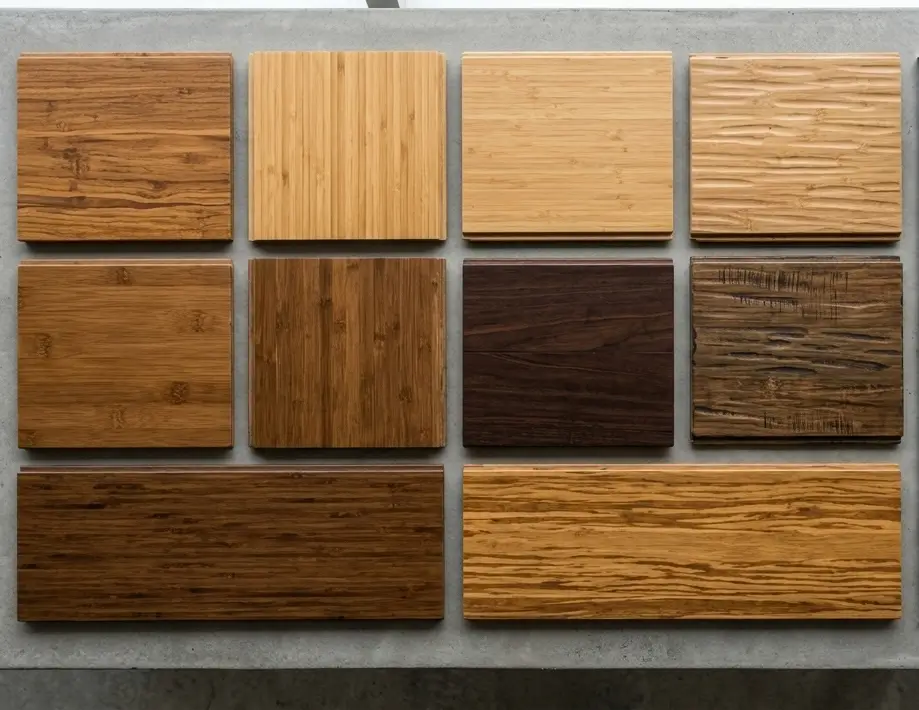
After three bamboo installations, 40+ samples ordered, and one expensive lesson, I’ve developed a sample evaluation system that catches what showrooms and single-sample orders miss. This isn’t about being obsessive. It’s about the math: samples are free or cost $5-30. Replacing flooring you hate costs $3,000-8,000.
The resources at BambooScope helped me systematize this approach, and I’ll walk you through exactly how to order, evaluate, and test bamboo flooring samples before committing to a purchase.
How Many Bamboo Flooring Samples Should You Order?
Order a minimum of eight bamboo flooring samples across at least three manufacturers. The NWFA (National Wood Flooring Association) recommends evaluating multiple samples from the same product line because natural materials show batch-to-batch color variation, and bamboo is no exception despite being grass, not wood.
Here’s my breakdown after tracking this across projects:
| Sample Category | Minimum Count | Why This Number |
| Primary choice (same product, different batches) | 3 | Catches batch variation |
| Alternative colorways | 2-3 | Your backup if primary disappoints |
| Different construction types | 2 | Compare strand-woven vs. engineered |
| Competitor brand comparison | 1-2 | Price/quality calibration |
I used to think three samples was plenty. Then I installed Cali Bamboo’s Fossilized Java (that $2,800 mistake) after evaluating exactly one sample. The installed floor ran noticeably darker because my single sample happened to be from a lighter batch.
When I redid my office in 2022, I ordered four samples of the same Ambient Bamboo product. Two were nearly identical. One ran warmer. One had more visible grain variation. That’s natural material reality, and why single-sample decisions fail.
If you’re comparing bamboo flooring types like strand-woven versus solid, add samples of each construction method to your order.
Where to Get Bamboo Flooring Samples (Free vs. Paid)
Get bamboo flooring samples from manufacturer websites (most offer 3-5 free), flooring retailers like LL Flooring or Floor & Decor (in-store pickup), and third-party sample services. Expect $0-5 per sample plus $0-15 shipping. Paid sample kits ($20-40) often include more samples with waived shipping, making them cheaper per-sample than “free” options.
The “free samples” game deserves scrutiny. Here’s what I actually paid:
My 2023 Sample Order Breakdown:
- Cali Bamboo: 3 “free” samples, $9.95 shipping = $3.31/sample
- Ambient Bamboo: 5-sample kit, $24.95 total = $4.99/sample
- LL Flooring: 4 in-store samples, $0 (but drove 22 miles round trip)
- Home Depot: 2 samples, $3.98 each + $7.99 shipping = $7.97/sample
The hidden calculation: Driving to three showrooms cost me roughly $18 in gas and 4 hours. Ordering the same samples online would have cost $35-50 with shipping. Neither is “free”, just differently expensive.
For strand-woven bamboo specifically, I recommend ordering directly from manufacturers rather than big-box stores. The bamboo flooring brands you’re evaluating typically offer larger sample sizes (6″×6″ vs. 4″×4″) through their own sites, which matters when assessing grain pattern consistency.
What to Look for When Evaluating Bamboo Samples
Most buyers look at color. Maybe grain. Then they decide. That’s maybe 20% of what samples can tell you.
The Complete Sample Evaluation Checklist:
Visual Assessment (do in YOUR space, not theirs):
- Color under natural morning light
- Color under afternoon light (different angle)
- Color under your actual artificial lighting
- Grain pattern consistency across multiple samples
- Finish sheen (matte vs. semi-gloss vs. high-gloss reads differently in person)
Physical Assessment:
- Thickness with calipers (verify manufacturer specs)
- Edge quality (chipping indicates manufacturing issues)
- Click-lock or tongue-and-groove fit between samples
- Weight (strand-woven should feel substantially heavier than solid)
Construction Assessment:
- Layer inspection on sample edge (how many plies?)
- Wear layer thickness (for engineered bamboo)
- Back inspection for CARB Phase 2 compliance marking
The test I wish I’d done: Take your sample and set it directly against your existing cabinets, wall paint, and furniture for 72 hours. What looks fine in isolation often clashes in context. The carbonized strand-woven I chose looked beautiful alone but turned muddy next to my honey oak cabinets.
I’ve learned to evaluate samples against the fixed elements I can’t change, not the ones I theoretically might update.
Sample Color Matches What You’ll Get Installed
MYTH: “If you like the sample color, you’ll like the installed floor.”
REALITY: Bamboo flooring color varies by batch, and installed floors look 10-30% different than samples due to scale, lighting angles, and natural variation across planks. A 4×6 sample shows one tiny section of what becomes a continuous field of 200-500 square feet.
Manufacturers show sample photos in studio lighting. Showrooms use spotlights. Your living room has windows on one side and shadows on the other. The sample represents potential color, not guaranteed color.
Order three samples of your chosen product from different order dates if possible. Evaluate under your worst lighting conditions, not your best. If you’re borderline on a color, go one shade lighter than your instinct. I’ve never regretted “too light.” I’ve regretted “too dark” twice.
For carbonized bamboo especially, where the coloring comes from a heat treatment process, batch variation runs higher than natural-finish bamboo. Check bamboo flooring colors and styles for more on how finishes affect real-world appearance.
The 72-Hour Home Acclimation Test for Samples
Here’s something I’ve never seen in a competitor’s sample guide: you can pre-test how your bamboo will respond to your home’s humidity environment using your samples.
My Sample Acclimation Protocol:
Day 1: Place samples in your target room. Photograph edges with a ruler for reference. Note any existing warping or edge lifting.
Day 2-3: Check samples morning and evening. In my 45% average humidity Colorado home, samples barely changed. My brother in Houston (65%+ humidity) watched a solid bamboo sample develop visible edge curl within 48 hours.
What this tells you: If a sample shows movement in 72 hours, that product will need aggressive humidity control in your space. This doesn’t mean you can’t use it, it means you need to budget for a whole-house humidifier or dehumidifier before installation.
My 2021 data point: Three samples, same room, 72 hours:
- Strand-woven (14mm): No visible change
- Solid horizontal (15mm): Slight edge lift
- Engineered click-lock (12mm): No visible change
The solid sample’s reaction told me that product would struggle with my basement humidity swings. I went with the strand-woven, which has performed perfectly for three years.
This simple test connects directly to bamboo flooring acclimation requirements. If your sample struggles, your floor will too.
Sample Thickness and What It Reveals About Quality
Measure your samples with calipers. Not because thickness determines quality, but because thickness discrepancies reveal manufacturer reliability.
What I’ve measured:
| Advertised Thickness | Measured Range | Verdict |
| 14mm strand-woven | 13.8-14.1mm | Acceptable |
| 12mm engineered | 11.4-12.2mm | One sample concerning |
| 15mm solid | 14.9-15.0mm | Excellent consistency |
When a manufacturer lists 14mm and I measure 13.2mm, that’s either QC issues or misleading specs. Either way, it predicts problems.
For engineered bamboo, the wear layer (the actual bamboo on top of the plywood core) determines refinishing potential. A 2mm wear layer allows one light sanding. A 4mm wear layer allows two. Manufacturers don’t always list this clearly, so I email asking specifically.
This connects to bamboo flooring hardness and durability, a product’s Janka rating matters less if the wear layer is paper-thin.
My Complete Sample Shopping Breakdown
| Source | Samples | Base Cost | Shipping | Total | Per Sample |
| Cali Bamboo direct | 3 | Free | $9.95 | $9.95 | $3.32 |
| Ambient Bamboo kit | 5 | $24.95 | Free | $24.95 | $4.99 |
| LL Flooring in-store | 4 | Free | , | $0* | $0* |
| Home Depot online | 2 | $7.96 | $7.99 | $15.95 | $7.98 |
| BuildDirect | 4 | Free | $12.95 | $12.95 | $3.24 |
| TOTAL | 18 | , | , | $63.80 | $3.54 avg |
*Excludes driving costs: approximately $9 gas + 2 hours
My verdict: The Ambient sample kit was the best value per-sample. “Free” samples with shipping often cost more than premium kits. LL Flooring’s in-store pickup saved money but cost time, worth it only because I wanted to see their full display.
What I’d do differently: Start with manufacturer sample kits rather than one-off orders. You’ll get more samples, consistent sizing, and often better shipping terms.
For overall cost context, see bamboo flooring installation cost, understanding total project cost makes sample investment feel less trivial.
When Samples Can’t Tell the Full Story
I need to be honest about sample limitations. Some things only reveal themselves at scale:
What samples CAN’T show:
- Plank-to-plank transition appearance
- Subfloor telegraph through thin products
- Click-lock ease under real installation pressure
- Long-term fading (samples don’t come with 3-year sun exposure)
- How scratches actually look after wear
What samples CAN show (reliably):
- Color family and general grain character
- Basic construction quality
- Initial response to your humidity
- Edge and surface finish quality
- Manufacturer accuracy on specs
For fading concerns, check bamboo flooring fading and discoloration, natural bamboo fades more than carbonized in UV exposure.
My workaround for scratch testing: I take my top-choice sample and drag a key across it. Not a scientific Janka test, but it shows me real-world scratch visibility better than any spec sheet. The strand-woven barely showed marks. The solid horizontal sample showed every scratch in bright light.
FAQs: Bamboo Flooring Samples
How long does it take to receive bamboo flooring samples?
Most manufacturers ship within 3-5 business days, with delivery in 7-10 days total. I’ve waited as long as 3 weeks for Ambient during a sale period, and as little as 4 days from Cali Bamboo. Order early in your decision timeline, not when you’ve already scheduled installation.
Can I return bamboo flooring samples?
Generally no, samples are considered consumables. Paid sample kits sometimes offer credit toward full-floor purchase ($15-30), but free samples are final. This is why ordering adequate quantity upfront matters more than trying to return and re-order.
Do bamboo floor samples show the click-lock system accurately?
Partially. You can test how two samples lock together, but that’s different from installing across 500 square feet where cumulative tolerance issues emerge. Samples reveal whether it’s click-lock vs. tongue-and-groove, but not installation ease. For installation mechanics, see bamboo flooring installation.
Should I order samples before measuring my space?
Yes. Samples take 1-2 weeks to arrive and 3+ days to evaluate properly. Start sample ordering immediately, measurement can happen in parallel. You need lead time for evaluation before committing.
Are showroom samples the same as shipped samples?
Usually yes, but showroom samples may be older batches. I’ve seen showroom samples faded from fluorescent lighting that didn’t represent current production. Ask when samples were put out, and request a fresh one from back stock if possible.
The Sample System That Actually Works
After three installations and more samples than I can count, here’s what I’d tell myself in 2019:
Treat sample shopping as a small project with its own timeline. Budget 2-3 weeks for ordering, receiving, and evaluating. Order eight minimum across at least three brands. Evaluate in your actual space under your actual lighting at different times of day. Run the 72-hour acclimation observation. Measure against manufacturer specs.
The samples aren’t the expensive part of this project. The floor is. And the gap between a sample you glanced at and a floor you’ll live with for fifteen years is exactly where $2,800 mistakes happen.
If I were starting today, I’d order two sample kits from my top manufacturer choices, request 2-3 additional samples in alternative colors, and live with them for a full week before deciding. The patience costs nothing. The impatience cost me real money.
For comprehensive brand evaluation once your samples arrive, bamboo flooring brands covers reputation, warranty differences, and what I’ve learned about manufacturer reliability over multiple purchases.