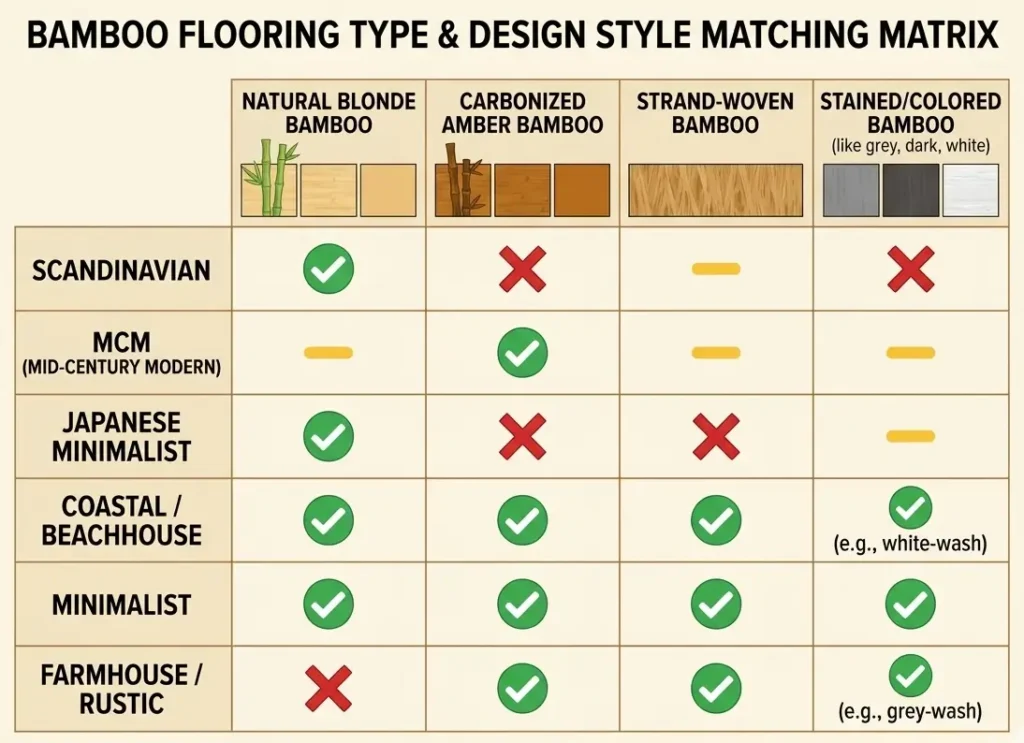
Bamboo flooring works beautifully within six major interior design styles, Scandinavian, mid-century modern, Japanese/Japandi, coastal, contemporary minimalist, and rustic farmhouse, but the specific bamboo type matters more than most design guides admit.
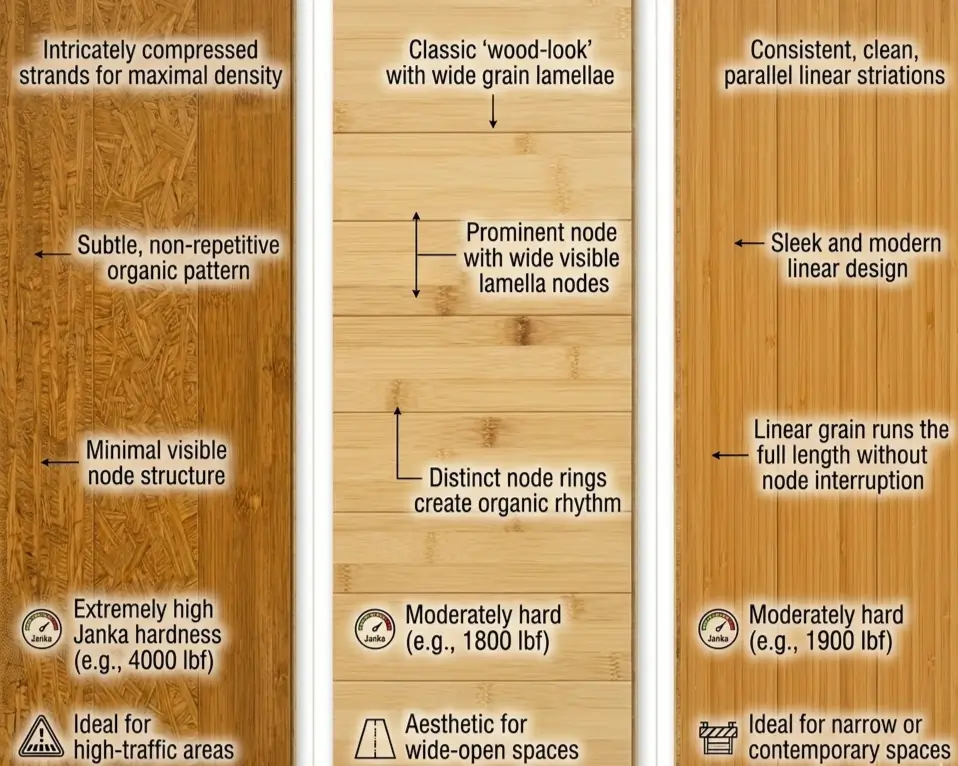
Strand-woven bamboo with its compressed, subtle grain suits minimalist aesthetics. Horizontal grain bamboo with its prominent lamella pattern fits rustic or coastal spaces. Carbonized bamboo’s warm caramel tones complement mid-century palettes. Get the pairing wrong, and you’ll notice something’s off without quite knowing why.
I’ve installed or consulted on bamboo flooring across all these styles since 2017, including three projects I’d call outright failures. Those failures taught me more than the successes. Here’s what I’ve learned about matching bamboo characteristics to design intentions, and where conventional advice steers people wrong.
Which Bamboo Flooring Types Fit Which Design Styles?
Different bamboo construction methods create dramatically different visual effects. Understanding these differences prevents expensive mismatches.
Strand-woven bamboo (compressed Moso bamboo fibers, 3,000-5,000 lbf Janka rating) produces a tight, almost indistinct grain pattern. This subtlety works for contemporary minimalist, Japandi, and certain Scandinavian applications where the floor should recede visually.
Horizontal grain bamboo features wide, flat strips showing the bamboo’s natural node patterns. These prominent lines suit coastal, rustic, and bohemian styles where visual texture adds warmth.
Vertical grain bamboo presents narrow linear striations, a middle ground that works for mid-century modern and transitional spaces needing modest visual interest without overwhelming pattern.
Carbonized bamboo (heat-treated for deeper coloration) ranges from honey to dark caramel. The process softens the Janka rating by roughly 20%, but the warm tones suit mid-century modern palettes centered on amber, mustard, and chocolate brown.
Natural bamboo stays blonde to light honey, cooler than most people expect. It pairs with Scandinavian design’s bright palette, but clashes with warm-toned furniture more often than designers acknowledge.
For foundational guidance on selecting between these types of bamboo flooring, that resource covers technical specifications. Here, I’m focused on aesthetic implications.
Scandinavian Design: Why Natural Bamboo Often Disappoints
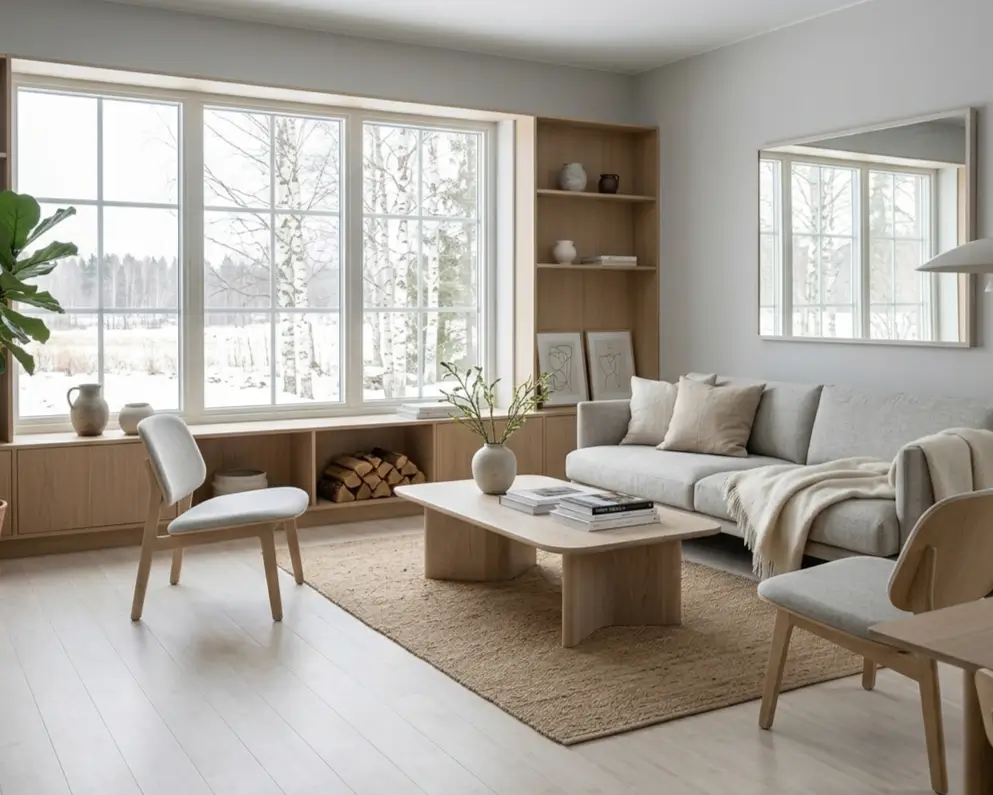
MYTH: “Natural bamboo’s light color is perfect for Scandinavian interiors.”
REALITY: Natural bamboo carries yellow-green undertones that clash with the cool whites and grays defining true Scandinavian palettes.
I installed natural horizontal-grain bamboo in a Pacific Northwest home styled as Scandinavian in 2019. Under the region’s gray daylight, the floor read as sickly rather than airy. The client’s white oak furniture looked pink by comparison.
What actually works: Strand-woven bamboo in a whitewashed or matte natural finish. The compressed grain eliminates the busy pattern Scandinavian design avoids, while a whitewash treatment neutralizes yellow undertones. Alternatively, wire-brushed engineered bamboo with a gray-wash finish integrates with Scandinavian’s characteristic textured neutrality.
Evidence: The same client replaced her floor with strand-woven bamboo in a matte finish with minimal sheen (under 25% gloss). The difference was immediate, her furniture finally cohered.
Regional consideration: Natural bamboo reads warmer in southern light. In Seattle, Minneapolis, or similar northern-light environments, compensate with cooler finish treatments.
Mid-Century Modern: The Carbonized Bamboo Sweet Spot
Mid-century modern design relies on warm wood tones, organic curves, and restrained pattern. Bamboo flooring can either anchor this aesthetic or undermine it entirely.
| Bamboo Type | MCM Compatibility | Why |
| Carbonized strand-woven | Excellent | Warm tone + subtle grain |
| Carbonized vertical grain | Good | Linear pattern echoes MCM lines |
| Natural horizontal grain | Poor | Too busy, fights furniture |
| Whitewashed bamboo | Poor | Wrong color temperature |
Carbonized strand-woven bamboo in a living room with a Noguchi coffee table and Eames lounger created exactly the warm, cohesive effect the style demands. The floor’s 3,400 lbf hardness also handled the heavy furniture without indentation, a practical bonus.
The caramel depth of carbonized bamboo (achieved through pressurized steam treatment of Moso bamboo) harmonizes with the teak, walnut, and rosewood tones dominating MCM furniture. Just confirm your carbonization level: light carbonization (honey) suits rooms with abundant natural light; dark carbonization risks making spaces feel cramped.
For pairing bamboo flooring with furniture in MCM spaces, guidance on bamboo furniture in modern contemporary styles shows complementary approaches.
Japanese and Japandi Aesthetics: Minimalism That Demands Restraint
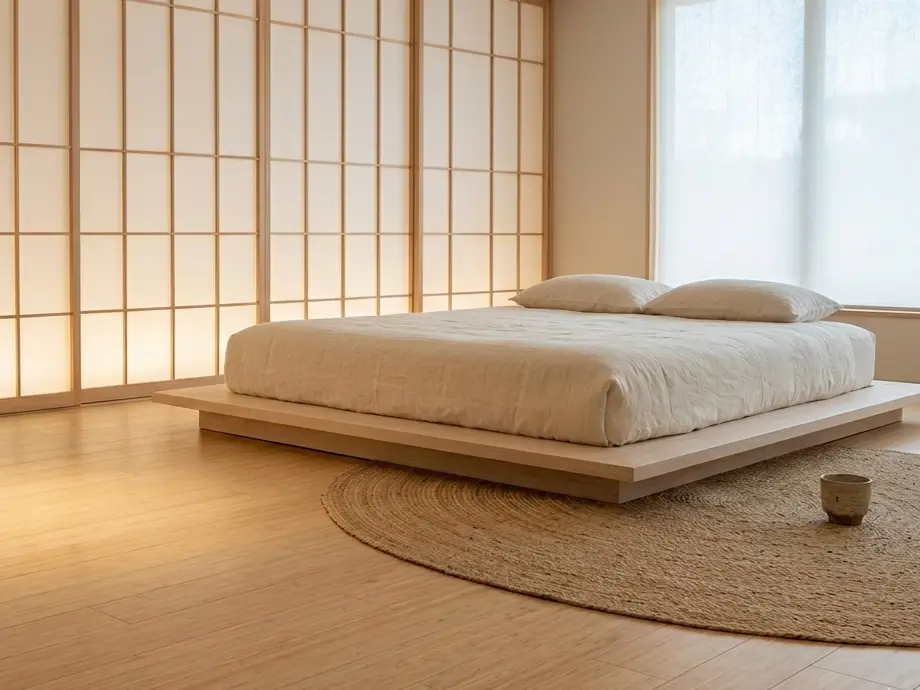
Japanese-influenced design treats flooring as negative space. The floor should feel present but not prominent, supporting the room’s tranquility rather than competing for attention.
Strand-woven bamboo in natural or light carbonized finish best suits Japanese and Japandi interiors due to its minimal grain visibility and connection to East Asian bamboo traditions.
Traditional Japanese architecture uses bamboo extensively, but as screens, fencing, and accents rather than structural flooring. Modern bamboo flooring in Japanese-influenced spaces works precisely because it references this material heritage without mimicking it literally.
I made a mistake in 2020 specifying high-gloss horizontal-grain bamboo for a meditation room. The client wanted “authentic Japanese materials.” The reflective surface and prominent grain pattern created visual noise that contradicted everything the design intended. We sanded and refinished with an ultra-matte penetrating oil (under 10% sheen), and the room finally breathed.
In Japanese or Japandi spaces, choose the least visually assertive bamboo available. Strand-woven with matte finish. No distressing. No heavy wire-brushing. Let the furniture and objects carry the visual weight.
Coastal Design: Horizontal Grain Finally Earns Its Place
Coastal interiors celebrate natural texture, weathered wood, woven fibers, organic irregularity. This is where horizontal-grain bamboo’s prominent pattern becomes an asset rather than a liability.
Product: Ambient Bamboo Floors Natural Strand (horizontal grain, 5/8″ thickness)
Setup: Southern California coastal home, west-facing bedroom, $4,200 materials + installation
Expected: Relaxed, beachy aesthetic; manufacturer claimed “organic warmth”
Actual: Exceeded expectations. The visible bamboo nodes read as driftwood-adjacent, complementing jute rugs and linen bedding perfectly.
Surprise: The same product failed in the adjacent bathroom, too much pattern in a small space created claustrophobic energy.
Limitation: Only tested in rooms 200+ sq ft; smaller spaces may not tolerate the visual weight.
Natural or lightly carbonized finishes suit coastal design’s sun-bleached palette. Avoid dark carbonization, which reads as formal rather than relaxed.
For coastal applications extending to outdoor spaces, bamboo outdoor furniture integration maintains material continuity.
Contemporary Minimalist: Where Strand-Woven Bamboo Excels
Contemporary minimalism demands floors that disappear. Strand-woven bamboo, with its compressed fiber structure obscuring traditional grain patterns, performs this role better than any other bamboo type.
Why it works: The manufacturing process, shredding bamboo fibers, compressing under extreme heat and pressure, creates a surface closer to composite material than traditional wood flooring. This near-uniformity suits interiors where architectural elements and statement furniture carry visual priority.
Color considerations: Gray-toned strand-woven bamboo (achieved through reactive staining or wire-brushing with gray pigment) suits concrete-accented contemporary spaces. Natural strand-woven works in warmer minimalist schemes.
Finish matters enormously: Semi-gloss (40-50% sheen) adds contemporary polish. Ultra-matte suggests Scandinavian or Japanese influence instead.
I’ve specified strand-woven bamboo in three contemporary minimalist projects since 2019. Each time, the flooring’s Janka hardness (3,000-5,000 lbf depending on manufacturer) handled high-traffic conditions while maintaining visual consistency. One client’s gallery-style living room still looks unchanged after four years, the floor’s neutrality lets her rotate art collections without flooring ever creating conflicts.
Selecting appropriate bamboo flooring colors and styles provides technical specifications for matching contemporary palettes.
Rustic and Farmhouse: Hand-Scraped and Distressed Options
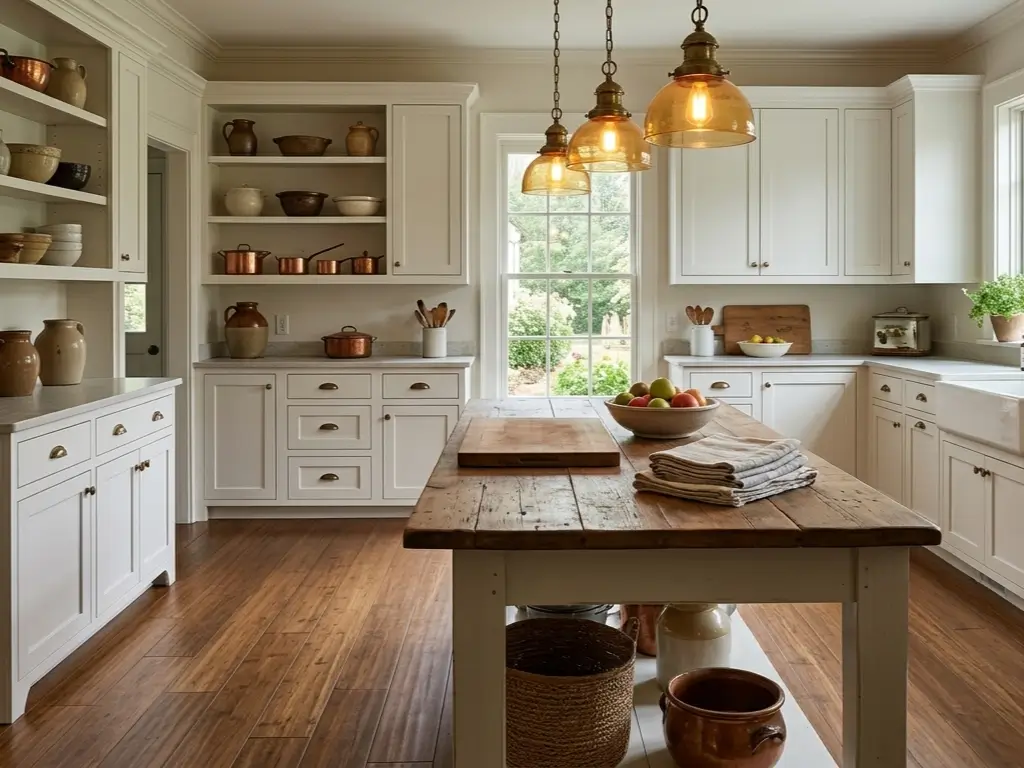
Rustic and farmhouse designs embrace imperfection. Hand-scraped bamboo flooring, mechanically distressed to simulate aged wear, suits these aesthetics when executed with restraint.
The problem: Many hand-scraped bamboo products overdo the distressing, creating cartoonish “rustic” effects that read as artificial. In farmhouse design, subtlety distinguishes authentic from theme-park.
What works:
- Light hand-scraping with visible tool marks (not uniform machined grooves)
- Carbonized base color with wire-brushed texture exposing lighter fibers
- Matte or satin finish (high-gloss contradicts the weathered intent)
- Wide plank formats (5″ or wider) matching traditional farmhouse scale
What fails:
- Heavy distressing with painted-in “wear patterns”
- Narrow planks suggesting modern manufacturing
- Any finish above 40% gloss
I consulted on a farmhouse kitchen in 2021 where the original strand-woven bamboo, installed by a previous designer, felt clinical. Replacing it with wire-brushed horizontal-grain bamboo in dark carbonization transformed the space. The floor finally matched the shiplap walls and vintage-style fixtures.
For furniture pairing in rustic spaces, vintage and retro bamboo furniture styles covers complementary approaches.
Common Design Mistakes I’ve Witnessed
After seven years working with bamboo flooring in design contexts, patterns emerge:
Mistake #1: Ignoring undertones. Natural bamboo’s yellow-green undertone clashes with cool-gray walls more often than clients expect. Always request physical samples and view them in your actual lighting.
Mistake #2: Mismatched formality. High-gloss finishes formalize any space. Installing high-gloss bamboo in a casual coastal home creates cognitive dissonance.
Mistake #3: Fighting the grain. Horizontal grain bamboo in minimalist spaces competes with clean lines. Strand-woven in rustic spaces looks too refined. Match grain prominence to style expectations.
Mistake #4: Forgetting aging patterns. Bamboo patinas differently than hardwood. Natural bamboo ambering (yellowing over time) intensifies in sunny rooms. If your design relies on maintaining a specific tone, UV-protective finishes matter, though they merely slow, not prevent, the shift.
Mistake #5: Sample-room mismatch. Samples viewed in showroom lighting mislead. I now require clients to live with 12″x12″ samples for a full week, observing them through morning, afternoon, and artificial light before committing.
FAQ: Bamboo Flooring and Interior Design
Can bamboo flooring work with traditional or formal design styles?
Bamboo rarely suits traditional European-influenced interiors (Georgian, Victorian, Colonial). The material reads as contemporary regardless of finish treatment, its Asian origins and modern manufacturing processes conflict with period-authentic aesthetics. For traditional spaces, genuine hardwood remains more appropriate despite bamboo’s sustainability advantages.
Does bamboo flooring limit furniture choices?
Less than you’d expect, but it’s not neutral. Strand-woven bamboo accommodates most furniture styles. Horizontal-grain limits you to casual or organic furniture forms. The key constraint is undertone: cool-toned bamboo with warm-toned furniture creates unintentional tension. Match your furniture’s wood undertones to your bamboo’s undertones.
How does bamboo flooring photograph for real estate listings?
Bamboo photographs well in contemporary and transitional homes, the clean lines read as “updated.” In traditional homes, bamboo floors can actually reduce perceived value among buyers expecting hardwood. A 2023 National Association of Realtors study noted bamboo flooring polled positively in homes under $500K targeting younger buyers, neutrally above that threshold.
What’s the safest bamboo choice if I change design styles frequently?
Strand-woven bamboo in medium carbonization (honey tone) with satin finish offers maximum flexibility. The moderate color works with warm and cool palettes; the subtle grain doesn’t impose style commitments; the satin finish bridges formal and casual. You’ll sacrifice distinctiveness for adaptability.
Making the Right Choice for Your Design
Every bamboo flooring selection involves tradeoffs. Strand-woven’s subtlety limits visual interest. Horizontal grain’s texture restricts style compatibility. Carbonization’s warmth reduces versatility. No single bamboo type suits every design intention.
If I were starting a design project today, I’d begin with finish and light before considering bamboo type. How much natural light does the room receive? What sheen level supports the design language? Only then would I select grain pattern and coloration.
The client whose floor failed in that mid-century living room? She eventually succeeded with carbonized vertical-grain bamboo. The floor finally stopped competing with her Eames chairs. She now tells people the expensive mistake taught her what no designer could explain: floors participate in design whether we want them to or not.
For related guidance on integrating bamboo floors with furniture, explore bamboo furniture styling and decorating approaches that maintain design continuity across material choices.