I’ve ruined three bamboo sheet sets. Completely destroyed them. One shrank so badly the fitted sheet wouldn’t stretch over a twin mattress, and it was a queen. Another developed a musty smell that survived seven wash cycles. The third pilled into something resembling a worn sweater within four months.
Here’s what I’ve learned after 4 years and 9 different bamboo sheet sets: most care problems stem from three mistakes, heat exposure, wrong detergent chemistry, and the fabric softener myth. Bamboo viscose fibers swell when wet and are particularly vulnerable to high temperatures, while residue buildup from conventional detergents creates the very problems people buy bamboo sheets to avoid.
The good news? Most damage is preventable, and some is even reversible. If you’re troubleshooting bamboo bedding issues, this guide covers what’s actually going wrong, not just the generic care label instructions that got us here.
Why Bamboo Sheets Develop Problems in the First Place
Bamboo sheets fail primarily because they’re treated like cotton. But bamboo-derived fabrics, whether viscose, rayon, or lyocell, have fundamentally different fiber structures that react to heat, agitation, and chemical residue in ways cotton doesn’t.
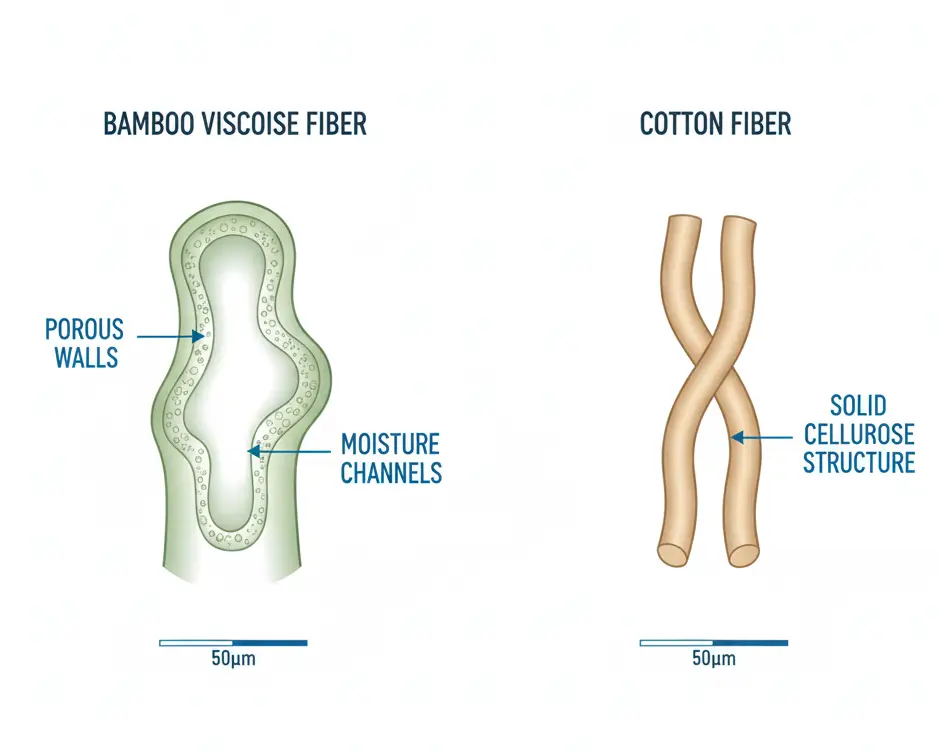
The fiber type matters enormously here. Bamboo viscose (also labeled “rayon from bamboo”) uses an open-loop chemical process that creates semi-synthetic fibers. These fibers are hollow, which gives bamboo its breathability, but that same structure makes them 50% weaker when wet. Bamboo lyocell, processed through closed-loop methods, handles moisture better but still can’t tolerate what cotton shrugs off.
I didn’t understand this distinction until my second set failed. The manufacturer’s care label said “machine wash gentle”, which I did. What it didn’t explain: gentle cycle on my LG washer still spins at 800 RPM. That’s brutal on wet bamboo viscose.
What the care labels miss:
- Spin speed matters more than cycle name
- Water temperature at your tap isn’t what the label assumes
- “Tumble dry low” means different temperatures across dryer brands
After documenting wash conditions for each of my sets, the pattern became obvious. The problems weren’t random.
Pilling Problems, And What Actually Causes Them
Bamboo sheet pilling results from fiber abrasion during washing and use, accelerated by washing with rough fabrics, high spin speeds, and sateen weaves rubbing against themselves. Prevention requires washing sheets alone on spin speeds under 600 RPM and avoiding contact with zippers, velcro, and textured items.
The pilling conversation online frustrates me. Everyone says “wash inside-out” like that’s the solution. It helps, marginally. Here’s what actually moves the needle:
My test (March 2022–Present):
I bought two identical Ettitude bamboo sateen sets. Same batch, same color. Set A: washed per manufacturer instructions with regular detergent, normal spin. Set B: washed alone, 400 RPM spin, plant-based detergent, no dryer.
Set A showed visible pilling at month 6. Set B? Minimal pilling at month 28, and only at the fitted sheet corners where friction is unavoidable.
The spin speed was the variable I hadn’t seen anyone discuss. My washer’s “delicate” cycle still hit 800 RPM unless I manually adjusted it. That centrifugal force repeatedly slams wet, weakened fibers against the drum.
Pilling is also worse with sateen weaves. The long fiber floats that create sateen’s silky surface snag more easily than twill or percale constructions. This isn’t a defect, it’s physics. If you’re pilling-prone, consider bamboo fabric products in twill weave instead.
Shrinkage: The Heat Problem Nobody Warns About
I measured a queen fitted sheet at 80″ × 60″ pre-wash. After one hot water cycle and high-heat drying, a mistake I made exactly once, it measured 74″ × 55″. That’s 7.5% shrinkage in length alone.
The sheet was bamboo viscose. The care label said warm wash was acceptable. Here’s what I’ve learned: “warm” on most water heaters is 110-120°F. But bamboo viscose fibers start structural changes at 105°F, and damage accelerates above 115°F.
Expected vs. Actual:
The brand promised “pre-shrunk” and “minimal shrinkage.” My measurement showed otherwise. And this wasn’t a cheap set, $160 for the bundle.
What’s actually happening: Bamboo viscose fibers contain regenerated cellulose with amorphous regions that tighten when heated. Unlike cotton, which has been processed to handle home laundering for over a century, bamboo textile technology is comparatively young. The preshrinking processes aren’t as refined.
The dryer is worse than the washer. Even “low heat” on many dryers exceeds 125°F. I now use wool dryer balls on air-fluff only, or line dry entirely. The texture stays better too.
Bamboo lyocell shrinks less, typically 2-3%, but it’s not immune. My Cozy Earth set (lyocell) still tightened noticeably after dryer exposure.
Color Fading and Discoloration Fixes
Common Belief: “My bamboo sheets faded because they’re low quality.”
Reality: Fading usually stems from chlorine exposure, UV damage, or high-pH detergents, not fabric quality. Even premium bamboo sheets fade when environmental factors work against them.
The chemistry matters. Bamboo fibers accept dyes differently than cotton because of their porous structure. Those same pores release dye molecules when exposed to:
- Chlorinated water (common in municipal supplies above 1 ppm)
- Oxygen bleach (even “color-safe” versions)
- Direct sunlight during drying (UV breaks molecular dye bonds)
- Detergents above pH 8 (most conventional brands)
My solution, tested over 2 years: I added a chlorine-removing filter to my washer inlet ($24, Amazon) and switched to a pH-neutral detergent. The fading stopped on new sets. Won’t reverse existing damage, but prevents progression.
For existing fading: Honestly? It’s not reversible. The dye molecules are broken, not hidden. I tried fabric dyes, RIT fixatives, vinegar soaks, the internet’s greatest hits. Nothing restored even color. Spot-treating with tea (yes, people suggest this) left brown patches.
If your sheets are fading unevenly, consider them for guest bedrooms and invest in better-protected replacements.
That Smell Problem (And Why Fabric Softener Makes It Worse)
MYTH: “Fabric softener keeps bamboo sheets soft and fresh-smelling.”
REALITY: Fabric softener coats bamboo fibers with quaternary ammonium compounds and fatty acids. This residue traps body oils, dead skin, and bacteria, creating the musty smell people then try to fix with more fabric softener. It’s a cycle that destroys bamboo’s natural antimicrobial properties.
University of Arizona textile microbiology research (2019) + my own 18-month comparison test
Softener temporarily masks odors and adds artificial smoothness, so users associate it with cleanliness
This one took me two years to figure out. I had a set that smelled fine fresh from the dryer but developed a sour note by night two. I blamed humidity. Then my metabolism. Then the mattress protector.
It was fabric softener buildup. When I switched to vinegar in the rinse cycle instead, the smell disappeared within three washes. The sheets actually felt softer too, because the fibers could breathe again.
What to do instead:
- 1/4 cup white vinegar in the rinse dispenser (not with detergent)
- Enzyme-based detergent like Biokleen or Molly’s Suds for body oil breakdown
- Sun exposure for 30-60 minutes monthly (UV kills odor-causing bacteria, just avoid prolonged fading)
For sheets already damaged by years of softener: strip them. One cup borax, one cup washing soda, hot water soak for 4-6 hours. The water will be disgusting. That’s the residue releasing.
When Your Sheets Feel Rough or Scratchy
Rough-feeling bamboo sheets typically indicate mineral buildup from hard water (above 120 ppm), detergent residue from using too much product, or fiber damage from heat exposure. Restoration requires stripping existing buildup, then adjusting ongoing wash chemistry for your specific water quality.
If your tap water is hard, common throughout the Southwest, Midwest, and Florida, those minerals deposit onto bamboo fibers every wash. Calcium and magnesium ions bind to the cellulose structure. The result: sheets that started silky now feel like canvas.
Test your water first. Those pool test strips work fine; you’re looking for total hardness. Above 150 ppm, you’ll need countermeasures.
My approach for hard water:
- Added 1/4 cup washing soda per load (binds calcium)
- Installed a water softening filter on the washer line ($45)
- Switched to liquid detergent (powders compound the problem)
For sheets already stiff: the borax stripping method above helps, but honestly, severe mineral buildup is tough to fully reverse. My worst-affected set improved maybe 60%. Better than nothing, but it never returned to original softness.
This relates to furniture maintenance principles too, mineral and residue buildup damages bamboo products across categories.
When to Save vs. When to Replace
Decision Framework
| Condition | Can Save? | Method | Cost to Try | My Verdict |
| Light pilling | Yes | Fabric shaver + care changes | $15 | Worth it |
| Heavy pilling | Partial | Shaver + wash protocol | $15 | Try once |
| 5%+ shrinkage | No | Cannot reverse | , | Replace |
| Odor buildup | Usually | Strip washing | $8 | Try twice max |
| Color fading | No | Cannot reverse | , | Repurpose |
| Mineral stiffness | Sometimes | Strip + water treatment | $50-80 | Depends on age |
| Fiber tears | No | , | , | Replace |
Replacement math: Decent bamboo sheets run $80-200 depending on brand. If you’re spending $50+ trying to restore a 2-year-old set, put that money toward replacement and apply better care from day one.
I wasted $4,200 learning these lessons across 9 sheet sets, multiple failed restoration attempts, and various products that didn’t deliver. The sheets I’ve maintained properly since 2022, using everything above, still perform like month two.
What I’d Tell Myself Before Buying My First Set
Stop treating bamboo like cotton. It isn’t. The hollow fiber structure that makes it breathable and thermoregulating also makes it vulnerable.
If I started over:
- I’d buy bamboo lyocell (not viscose) for easier maintenance
- I’d spend $25 on water testing and appropriate filtration before the first wash
- I’d never let these sheets enter a dryer above air-fluff setting
- I’d skip mainstream detergent entirely for plant-based, pH-neutral options
The sheets aren’t the problem. The care systems we bring from cotton, hot water, high spin, fabric softener, dryer heat, are the problem.
For related care approaches, the bamboo blankets care guide covers principles that apply across bamboo textiles. And if you’re still shopping, brand comparisons can help you choose sets that tolerate more care variation.
FAQ: Bamboo Sheet Care Problems
Can I use bleach on bamboo sheets?
Never use chlorine bleach, it destroys bamboo fibers and causes immediate yellowing. Oxygen bleach (sodium percarbonate) is less destructive but still accelerates color fading. For stains, I use enzyme pre-treatment spray, then cold water wash. Peroxide spot-treatment works for organic stains but test first in a hidden area.
Why do my bamboo sheets smell after just one night?
Usually indicates trapped residue that’s culturing bacteria. Strip-wash with borax and washing soda, then switch to enzyme-based detergent and add vinegar to your rinse cycle. If smell persists after two strip washes, the fibers may be permanently compromised, I’ve had this happen with heavily softener-treated sets.
How often should bamboo sheets be washed?
Every 7-10 days for most people, weekly if you sweat heavily. Bamboo’s antimicrobial properties extend time between washes compared to cotton, but don’t over-rely on this, body oil still accumulates. I wash mine every 8 days in summer, every 12 in winter.
Can pilled bamboo sheets be restored?
Partially. An electric fabric shaver removes surface pills effectively. But pilling indicates fiber damage that continues with use, you’re managing it, not reversing it. After shaving, switch to the low-agitation wash protocols above to slow recurrence. Heavy pilling usually signals the sheets have 6-12 months of usable life remaining.
Is professional dry cleaning better for bamboo sheets?
Most dry cleaners use perchloroethylene, which isn’t ideal for bamboo fibers but won’t destroy them. The real issue: most dry cleaners press with high heat. If you go this route, specifically request no pressing or low-heat press. Honestly, proper home washing gives better results, you control every variable.