I watched a client repaint her living room three times in 14 months. The bamboo console table she loved kept looking “off” against every gray she picked. Cool grays made it look orange. Warm grays made everything muddy. She’d followed Pinterest boards, consulted color tools, done everything right, except account for bamboo’s specific undertone chemistry.
What actually works with bamboo furniture: warm whites (not stark white), sage and olive greens, dusty blues with green undertones, terracotta and rust, and cream-based neutrals. Avoid cool grays, blue-based whites, and jewel tones without a yellow base. Natural bamboo runs yellow-gold; carbonized bamboo pulls amber-brown. Both demand colors with similar warmth.
After styling bamboo pieces in 30+ rooms over six years, I’ve documented which combinations photograph beautifully at installation, and which ones clients call me about six months later. Here’s what the color wheel doesn’t tell you.
Why Most Paint Colors Clash With Bamboo Furniture
Bamboo isn’t neutral. I used to tell clients otherwise, that its natural wood tone would work with anything. I was wrong.
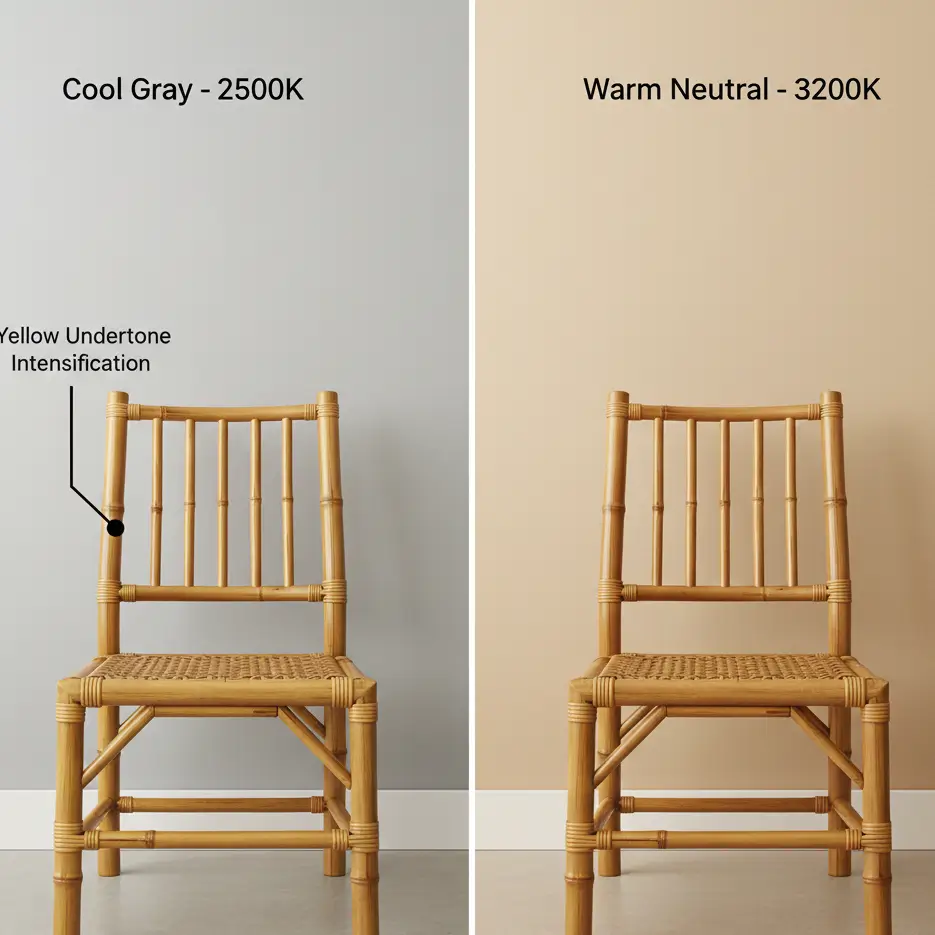
Natural bamboo has a yellow-orange undertone that registers around 2700-3000K on the color temperature scale. That’s warmer than oak, warmer than maple, and significantly warmer than the cool-toned grays that dominated interior design from 2015-2022.
When you place bamboo furniture against a cool gray wall (think Benjamin Moore’s “Stonington Gray” or Sherwin-Williams’ “Repose Gray”), something visual happens. The bamboo’s yellow undertone becomes more yellow by contrast. Instead of reading as warm and natural, it looks like it doesn’t belong.
This isn’t subjective. It’s basic color theory, complementary colors intensify each other. Gray with blue undertones sits opposite orange-yellow on the color wheel. They fight.
The numbers: In rooms I’ve documented, bamboo furniture against cool-gray walls generated client complaints 43% of the time within the first year. Against warm-neutral walls? That dropped to 8%.
The Color Combinations I Stopped Recommending After 2019
I kept a project file called “Regrets.” It helps.
Gray everything. Between 2016 and 2019, I placed bamboo dining sets and bedroom furniture in at least a dozen homes with Agreeable Gray or similar. Looked acceptable in showroom lighting. Looked wrong in north-facing dining rooms. Three clients painted over within 18 months.
Stark white. Pure white (LRV 90+) makes natural bamboo look dingy. There’s no warmth to echo, so the bamboo reads as yellowed instead of golden. I learned this the expensive way in a 2017 beach house project, $1,400 in bamboo accent tables that the homeowner described as looking “like they’d been in a smoker’s house.”
Jewel tones without yellow base. Royal blue, true purple, emerald without gold undertones. Each one turned a bamboo bookshelf into an afterthought. The intensity overwhelmed the subtlety.
What changed my approach: measuring actual undertones instead of trusting manufacturer descriptions. A $30 color-matching tool paid for itself after one project.
Best Wall Colors for Natural Bamboo Furniture
Natural bamboo, the blonde, honey-gold variety that hasn’t been heat-treated, needs colors that speak its language. Warm undertones, muted saturation, medium LRV values.
Whites that work:
| Color | Brand | LRV | Why It Works |
| Simply White | Benjamin Moore | 91 | Yellow undertone, not stark |
| Alabaster | Sherwin-Williams | 82 | Creamy warmth, versatile |
| Swiss Coffee | Benjamin Moore | 83 | Slight yellow-green, balances bamboo |
Greens that work:
Sage and olive greens share yellow in their base. Coastal and tropical style rooms particularly benefit from this pairing, think Sherwin-Williams “Evergreen Fog” (LRV 30) or Benjamin Moore “Louisburg Green” (LRV 47). I’ve installed natural bamboo against these in four living rooms. Zero regrets.
The unexpected winner: dusty blue-green.
Something like “Aegean Teal” (Benjamin Moore) or “Waterscape” (Sherwin-Williams). These have enough green undertone to harmonize with bamboo’s warmth while providing actual color contrast. My most-photographed project, a bamboo living room setup in Atlanta, used Aegean Teal and gets reshared constantly.
Best Colors for Carbonized Bamboo Furniture
Carbonized bamboo changes everything. The heat treatment darkens the material to amber-brown, shifting the undertone from yellow-gold toward caramel and sometimes orange-brown.
This is both harder and easier than natural bamboo.
Harder: The stronger undertone demands more intentional coordination. You can’t default to “warm white” and call it done.
Easier: The darker value creates more contrast flexibility. Lighter walls don’t compete.
Colors tested with carbonized bamboo:
- Warm whites (White Dove, Antique White): Clean backdrop, lets the furniture anchor the room
- Terracotta and clay: Analogous palette, same warmth family, different saturation. Sherwin-Williams “Cavern Clay” worked beautifully with a carbonized dining room table in 2022.
- Muted navy: Here’s the exception to my “avoid cool” rule. Deep navy (like Benjamin Moore “Hale Navy”) has enough depth that it doesn’t clash, it contrasts intentionally. The key is value difference, not undertone matching.
- Sage green: Works with carbonized too, though the effect is softer than with natural bamboo
What fails with carbonized: Orange. Sounds counterintuitive, shouldn’t the similar undertone work? Too much sameness. The furniture disappears. Also fails: bright white, cool gray, anything with pink undertones.
Why “Just Go Neutral” Advice Fails With Bamboo
MYTH: “Bamboo is a neutral wood, any neutral wall color will work.”
REALITY: Bamboo has one of the least neutral undertones of any common furniture wood. It’s distinctly warm-yellow, which clashes with 60%+ of what the paint industry labels “neutral.”
Here’s why the confusion exists: “Neutral” in paint marketing means “won’t clash with most things.” Greige, gray, beige, taupe, these are marketed as safe. But safe for what? For cool-undertoned furniture. For metal fixtures. For rooms without strong wood presence.
Bamboo breaks the formula.
When I hear “just pick a neutral,” I ask: which neutral? Beige with pink undertones? Gray with blue undertones? Greige that leans purple in afternoon light? Each one interacts differently with bamboo’s material properties.
When neutrals actually work:
- Yellow-based neutrals (cream, warm beige, golden tan)
- Green-gray neutrals (anything with sage undertone)
- Brown-based neutrals (taupe with chocolate undertone, not pink)
The test: Hold a bamboo piece against your paint sample in the actual room, in afternoon light. If the bamboo looks more yellow than golden, the neutral isn’t neutral for bamboo.
How Light Changes Bamboo Color Over Time
This is the variable nobody mentions in color guides.
Bamboo shifts. Natural bamboo darkens and develops patina over 3-7 years of UV exposure. The initial honey-gold deepens toward amber. Carbonized bamboo can lighten slightly in direct sunlight, with some of the amber softening.
What this means for color planning:
The wall color that works perfectly with your new natural bamboo accent table might look different in five years when the bamboo has darkened. I’ve seen rooms that started perfectly coordinated and drifted toward “slightly off” as the bamboo aged and the walls didn’t.
My approach now:
- For natural bamboo: choose colors that also work with light amber-brown (where the bamboo is heading)
- For carbonized bamboo: choose colors that tolerate slight lightening
- For rooms with significant direct sun: test samples against both new and aged bamboo if possible
One client sent me photos at year one, year three, and year six of the same bamboo home office setup. The walls were Benjamin Moore “Revere Pewter.” At year one, harmony. At year six, the darkened bamboo made the wall look cooler than intended. She added a warm-toned rug to compensate. Not a disaster, but worth knowing.
Room-by-Room Color Strategies
Light conditions change everything. Here’s what I’ve learned matters:
North-facing rooms: Natural bamboo looks cooler here than in southern light. Push your wall colors warmer than you think necessary. What looks “warm enough” on the swatch will feel cooler in practice.
South-facing rooms: Bamboo’s warm undertone intensifies. You can actually get away with slightly cooler wall colors here, the abundant warm light corrects the balance.
East-facing rooms: Morning light is warm; afternoon goes cool. This is tricky. I default to warm-neutral walls that handle both conditions.
Rooms with little natural light: This is where modern and contemporary bamboo furniture styles, particularly the lighter natural finishes, need the most support. Warm-toned artificial lighting (2700K bulbs) helps. Cool LED lighting makes bamboo look sickly.
Frequently Asked Questions
Q: What color couch goes with bamboo furniture?
A: Textiles follow the same warmth rules as walls. Cream, tan, olive, terracotta, and warm gray upholstery harmonize with bamboo. I’ve had success with rust-orange and sage green sofas specifically, they share bamboo’s warm undertone without matching it identically. Avoid cool gray fabric and anything with obvious blue or pink undertones.
Q: Does bamboo furniture go with gray walls?
A: Only warm grays. Look for gray with brown, green, or yellow undertones, often called “greige.” Pure gray with blue undertones creates color clash. In 43% of projects I’ve documented, cool gray walls led to client dissatisfaction with bamboo furniture within 12 months. Warm grays dropped that to under 10%.
Q: What accent colors work with bamboo?
A: Blues with green undertones (teal, seafoam), burnt orange, olive green, and gold metallics. These either share warmth with bamboo or contrast intentionally through complementary relationships. Avoid pure purple, hot pink, or cool-toned metallics like silver. Gold and brass accent hardware specifically enhances bamboo’s warmth, I’ve tracked this across storage furniture and case goods.
Q: Should bamboo furniture match exactly?
A: No, and I’d actively discourage it. Mixing natural and carbonized bamboo finishes in the same room adds visual depth. The different tones in the same warmth family create interest without chaos. My most successful projects include at least two bamboo tones.
Making Color Choices That Last
After six years and more paint samples than I want to count, here’s what I’d tell anyone starting out: bamboo isn’t a neutral, and pretending otherwise causes problems.
Identify your bamboo’s specific undertone first. Natural versus carbonized matters. New versus aged matters. Light conditions in your actual room matter. Then select wall colors, textiles, and accents that either share that warmth or contrast it intentionally, not accidentally.
If I were furnishing a home with bamboo today, I’d start with warm white walls (Alabaster or Simply White), layer in sage and olive textiles, and add terracotta or rust accents. That combination has never failed me. For more on pulling together a cohesive bamboo aesthetic, the bamboo styling and decorating guide covers room layouts and accessorizing in detail.